Little Mishaps in Portugal #1
Gas station and tollgate episodes while traveling from Spain to Portugal
From Spain to Portugal
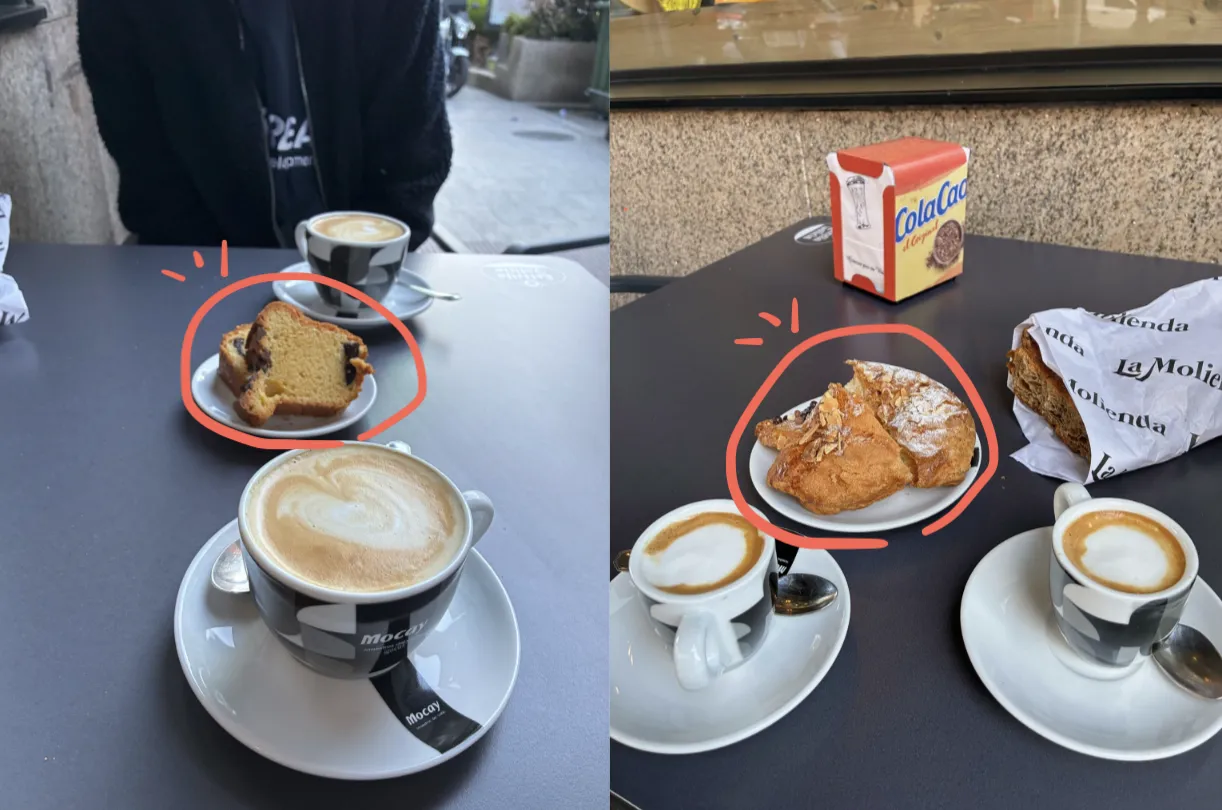
April 6, 2026. It was the day to move from Vigo, Spain to Porto, Portugal. I revisited La Molienda, my favorite bakery near our accommodation in Vigo. Since the Easter holiday ended and it was Monday, the narrow streets of Spain seemed lively with people commuting to work.
Both in A Coruna and Vigo, when you order coffee at cafes or bakeries, they give you a slice or two of bread. I'm not entirely sure, but it seems like they give away bread that's been cut and left over or is in a state that's awkward to sell after some time has passed. By my standards, for a free sample, it was delicious and generous enough that I didn't need to buy bread separately and could enjoy it with coffee. This isn't the case throughout all of Spain, but rather a culture of the Galicia region in northern Spain. I grabbed the steering wheel, enjoying Spain's warmth and generosity.
Forgot to Refuel Before Leaving Spain
After driving in Portugal and Spain for about a month and refueling several times, I basically found that Spain's gas prices were more than 20% cheaper than Portugal's. Currently, with oil prices having risen significantly due to the Iran-US war, for 95 Gasoline, Spain was around 1.51.6+ euros per liter, while Portugal was around 1.82.0+ euros. With about 1/4 of the car's fuel remaining, I intended to refuel before leaving Spain, but to quickly escape the congested commuter roads, I passed several gas stations in the city, and as soon as I entered the highway, I crossed the border and missed the opportunity to refuel. I think I lost about 17 euros.
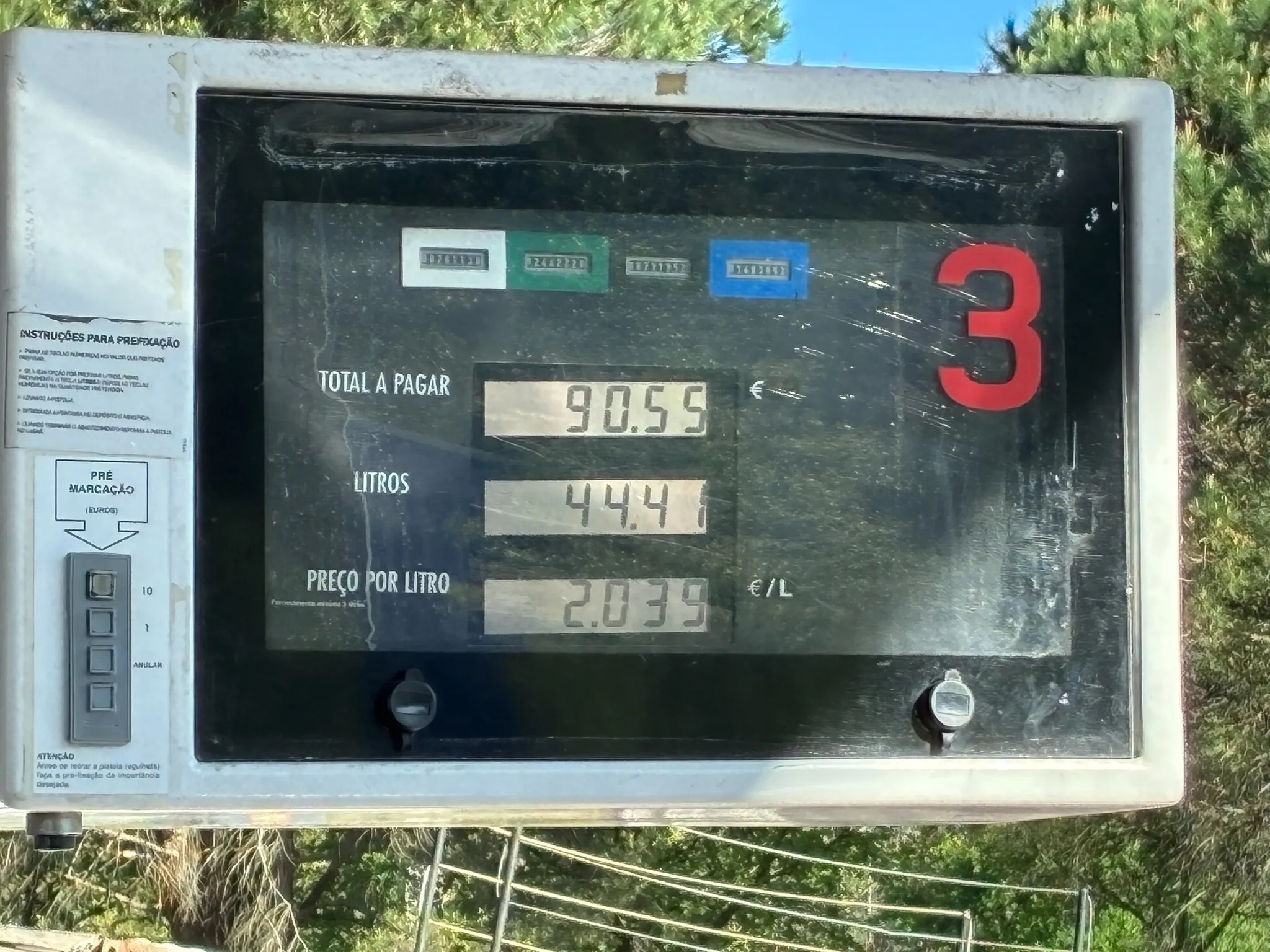
Today's lesson: If there's something to do, do it immediately even at the cost of context switching.
The Tollgate Incident
Portugal has a service called Via Verde (https://www.viaverde.pt). Like Korea's Hi-Pass, it's a system that charges tolls by recognizing equipment or license plates without having to ticket and pay every time you pass through a highway tollgate. When I received the rental car, the staff told me it would be convenient to sign up, so I did, but I didn't use it. Since it was a rental car, there could be issues with recognition failures and subsequent charges, and anticipating that these would be processed through the car manufacturer or agency made me tired even before anything happened. Unless it was unavoidable, I had been ticketing and paying at each tollgate.
After crossing the Spanish border and passing through the Portuguese highway, I went through several tollgates. At one tollgate, I inserted the ticket into the payment machine to pay, but it kept spitting the ticket back out as if it couldn't recognize it. After trying several times and failing, the payment machine started giving instructions with a 'person'. The problem was that I couldn't understand Portuguese, so they gave instructions in English, but the sound through the speaker was so garbled that I couldn't understand the staff's English. I barely caught "No No Box three, No Box 3, ...". Thinking they were telling me to get out of the car and go to booth 3 where the staff was, I got out of the car, but they repeated "No No Box 3" even more intensely, leaving me even more clueless. After arguing with the staff through the speaker for several minutes, cars started lining up behind me one by one, and my anxiety grew.
Eventually, I got out of the car and asked the driver behind me for help, and I watched anxiously as that person and the staff communicated and acted. The payment machine has 3 parts:
- Ticket insertion slot
- Credit card or cash payment slot
- Receipt collection slot
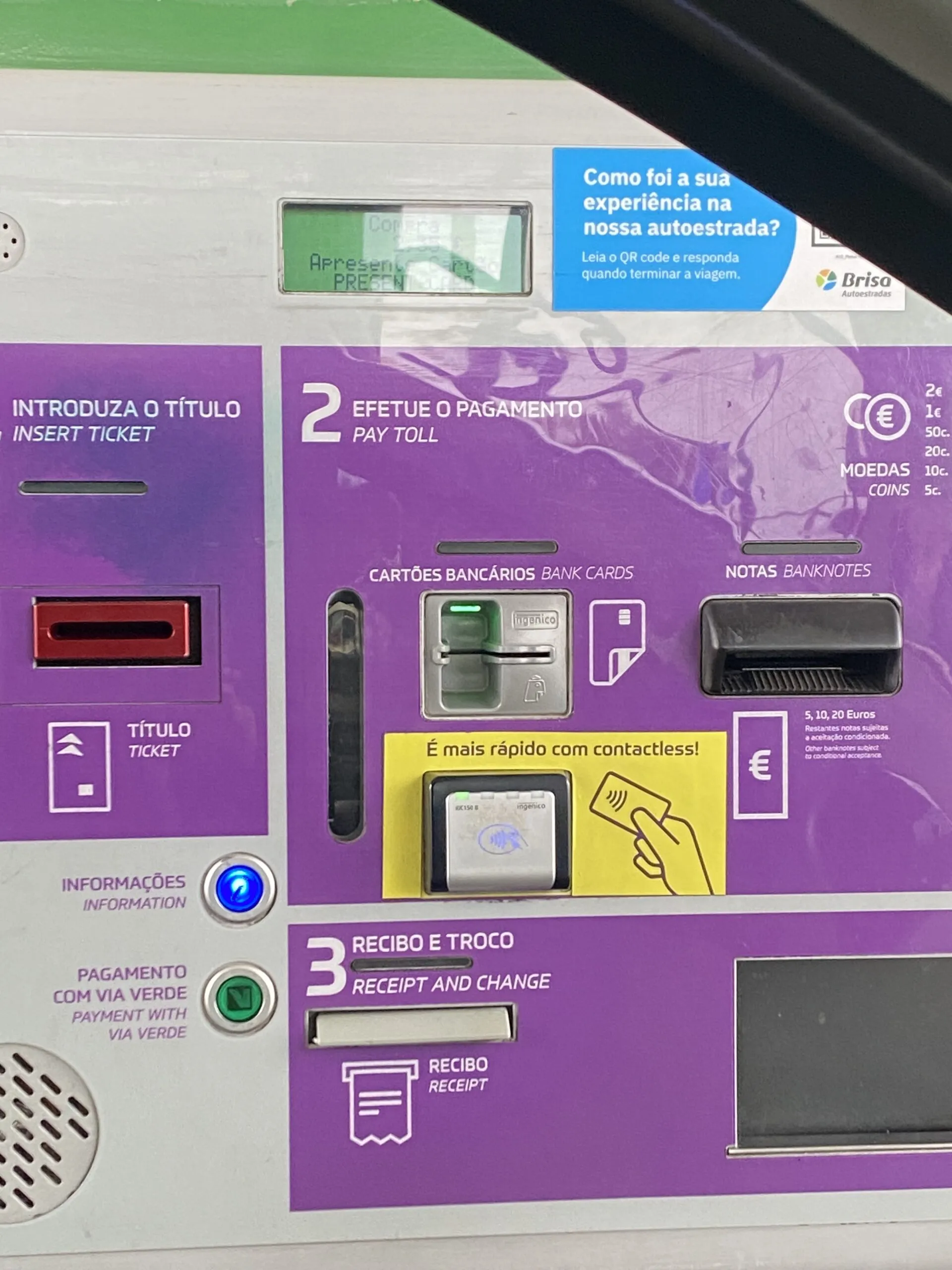
Box 3 meant the receipt collection area, number 3. More precisely, there was a black box next to the receipt collection location used for collection. It was a place I hadn't noticed when I was flustered by the ticket processing failure. Even the driver who helped me, perhaps because it wasn't a typical situation, confirmed with the staff several times whether it was correct to put the ticket there, and only after placing the ticket in that box did the subsequent process proceed. Only after the staff remotely controlled the machine and I paid the presented amount could I safely exit the tollgate.
After looking it up later, naturally, the Portuguese highway operator's operating manual had regulations for this situation. When unmanned automated equipment problems occur, the central control center intervenes in real-time through a remote support system. There are standard tollgate operation guidelines within Europe.
In summary, when a ticket reading error occurs, staff secures physical evidence:
- Proving ticket possession by the customer inserting the ticket into the machine
- Subsequently physically collecting the ticket After that, manual toll application is applied. It's something that can sufficiently happen during highway operations, and operational responses are also manualized.
Today's lesson: Systems have manuals for exceptional situations. If I don't understand, actively ask for help.